
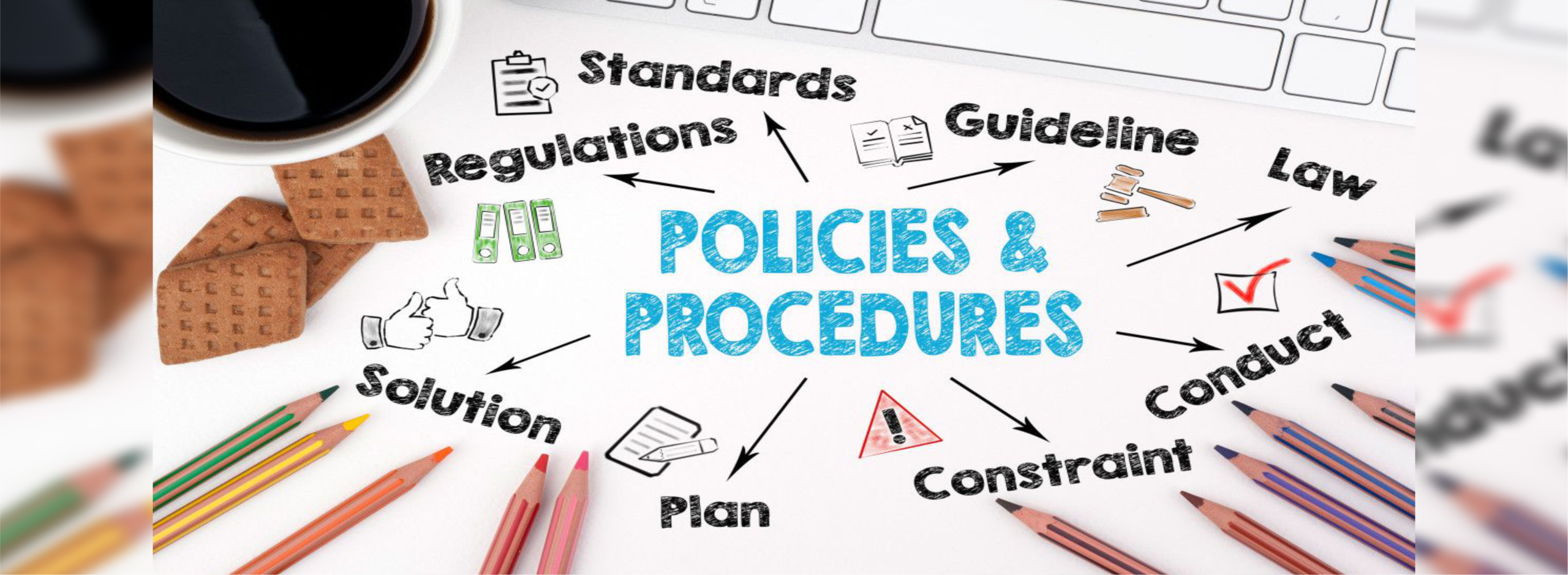
Company POLICY
general policy for health and safety
It is Company policy to conduct business activities in a manner that ensures, as far is reasonably practicable, a healthy and safe environment for its employees and members of the public where they come into contact with the company, its products and services.
It is the duty of the management to do everything possible in the design, construction, operation and maintenance of all equipment and facilities to prevent risks to health and personal injury. Equally, all employees have a duty to exercise personal responsibility and take reasonable care for the health and safety of themselves and any other persons who may be affected by their actions or omissions at work.
- Objectives:
a) To set and maintain high standards of health and safety as they relate to employees, contractors and their employees, customers and the general public.
b) To maintain these standards by conforming to all statutory requirements and ensuring safe places of work and safe systems of work.
c) To ensure that all employees receive the appropriate instruction and training to perform their work safely and efficiently.
d) To ensure that all employees: – are properly informed of their responsibilities for health and safety matters and discharge them effectively participate in the prevention of accidents and in the protection of health. Report any incident that has resulted or may have resulted in injury to a person or damage property.
e) To ensure that all contractors working on Company premises are informed of Company health and safety standards, and that procedures for monitoring compliance exists without detracting from the contractor’s legal responsibilities.
f) To ensure that the joint consultation with employees on health and safety matters is maintained on a regular basis.
- Responsibilities
- Managing Director/ General Manager: The Managing Director has overall responsibility for implementation of this policy.
- Department Managers/Supervisors: The Managing Director may delegate his authority to departmental managers/supervisors as appropriate. It is the responsibility of all departmental managers and supervisors to ensure tha working conditions and practices within their area of control are, as far as is reasonably practicable, safe and without risk to health.
- The General Manager has responsibility for the management of safety inspections, safety training, and ensuring that all legal requirements are met. Any accident or incident must be reported to the Managing Director.
- The General Manager is responsible for the maintenance of fire precautions, equipment, the organisation of fire drills, and evacuations. The evacuation procedure is displayed on the company notice boards.
- A designated First Aider shall provide emergency first aid treatment following an accident until the arrival of the professional Emergency Services. The names of the designated First Aiders are displayed on the company notice boards.
- All employees have a statutory duty to take reasonable care of the health and safety of themselves and others who may be affected by their acts or omissions at work. They are required to co-operate with their managers/supervisors so far as it is necessary to enable the latter to fulfil their own statutory duty.
- It is also required that all employees perform their work diligently and well and that they comply with the issued rules and instructions, and report to the appropriate manager/supervisor any occurrence or defect which appears to present a risk to health and safety.
Quality Policy Statement
The Directors and Management of Scorpio Energy Limited are committed to the achievement of high standards of product and service quality, firmly believing this to be a prime factor in the maintenance of healthy trading relationships with the Company’s many valued customers.
The Company’s Quality System is documented in this Quality Manual and the associated Quality Control Procedures and Working Instructions.
Operation to the Quality Policy and the associated procedures is mandatory for all employees.
Each Manager and Supervisor has the responsibility and authority to ensure that this policy is understood and implemented at all levels within his department and to identify any additional training required to fulfil the objectives of the system.
In accordance with the requirements of Well Intervention Services, the Quality Coordinator is hereby nominated as the management representative with the responsibility and the authority to implement, monitor and maintain the Company Quality System. The General Manager shall act as management
representative as required when the Quality Coordinator is unavailable to fulfil this function.
Resource requirements are identified by the Company Management for each order as they arise at tender or contract review, with general or longer-term requirements being highlighted at the Management Review meetings.
The Directors and Management are confident that this policy enable Scorpio Energy Limited to meet the product and service quality standards required by the various industries with which the Company is involved and that the Company can therefore continue to prosper.
Health and HSE Policy Statement
It is the policy of Scorpio Energy Limited to conduct its activities in a manner that ensures, as far is reasonably practicable, a healthy and safe environment for its employees and members of the public where they come into contact with the company, its products and services.
It is the duty of the management to do everything possible in the design, construction, operation and maintenance of all equipment and facilities to prevent risks to health and personal injury.
Equally, all employees have a duty to exercise personal responsibility and take reasonable care for the health and safety of themselves and any other persons who may be affected by their actions or omissions at work.
Objectives:
- To set and maintain high standards of health and safety as they relate to employees, contractors and their employees, customers and the general public.
- To maintain these standards by conforming to all statutory requirements and ensuring safe places of work and safe systems of work.
- To ensure that all employees receive the appropriate instruction and training to perform their work safely and efficiently.
- To ensure that all employees:-
- Are properly informed of their responsibilities for health and safety matters and discharge them effectively.
- Participate in the prevention of accidents and in the protection of health.
- Report any incident that has resulted or may have resulted in injury to a person or damage property.
- To ensure that all contractors working on Company premises are informed of Company health and safety standards, and that procedures for monitoring compliance exists without detracting from the contractor’s legal responsibilities.
- To ensure that the joint consultation with employees on health and safety matters is maintained on a regular basis.
Responsibilities:
- General Manager: The General Manager has overall responsibility for implementation of this policy.
- Department Managers/Supervisors
The General Manager may delegate his authority to departmental managers/supervisors as appropriate.
It is the responsibility of all departmental managers and supervisors to ensure that working conditions and practices within their area of control are, as far as is reasonably practicable, safe and without risk to health.
The General Manager has responsibility for the management of safety inspections, safety training and ensuring that all legal requirements are met. Any accident or incident must be reported to the General Manager.
The General Manager is responsible for the maintenance of fire precautions, equipment, the organization of fire drills and evacuations. The evacuation procedure is displayed on the canteen notice board.
Emergency first aid treatment following an accident shall be provided by a designated First Aider until the arrival of the professional Emergency Services. The names of the designated First Aiders are displayed on the canteen notice board.
All employees have a statutory duty to take reasonable care of the health and safety of themselves and others who may be affected by their acts or omissions at work and to cooperate with their managers/supervisors so far as it is necessary to enable the latter to fulfil their own statutory duty.
It is also required that all employees perform their work diligently and well and that they comply with the issued rules and instructions, and report to the appropriate manager/supervisor any occurrence or defect which appears to present a risk to health and safety.
Environmental Policy Statement
As a responsible corporate citizen, Scorpio Energy Limited realizes the importance of the environment and wishes to minimize or remove any negative impact its business operations have on the environment.
SEL commits to conduct its business in a manner to protect the health and safety of its employees, customers, the public and the environment.
Policy and objectives have been developed.
- The policy statement covers compliance with the law, environmental protection and stewardship, risk management and public responsiveness.
- The policy components give a broad scope of the SEL management to the policy.
POLICY:
PLI is committed to the preservation and protection of the environment and to sound environment practices. It is the policy of the Company to exercise responsible stewardship of natural resources that may be impacted by our activities.
The management of SEL, through active leadership, commits to understanding and addressing concerns underlying environmental laws and regulations and to expand efforts to protect and conserve the environment beyond what is required.
With the knowledge and experience it gains through its active environmental policy, SEL is further committed to contribute to broader based environmental efforts.
- The environment is a priority in evaluating, planning and executing company activities. SEL is committed to:
- Protect environmental quality and human welfare in our communities
- Implement environmentally sound policies designed to prevent, mitigate and where appropriate, remedy the impacts on the environment of the community.
- Counsel customers on potential environmental hazards and work with them to address questions and concerns.
- Ensure that all levels of the organization understand their responsibility and accountability for implementing environmentally sound practices.
- The understanding and addressing of concerns underlying environmental laws and regulations. SEL is committed to:
- Put in place policies, programs and procedures as well as internal controls to ensure compliance with the spirit, as well as the letter, of laws and regulations.
- Establish goals and targets against which progress scan be measured.
- Conduct periodic environmental reviews to evaluate environmental performance by measuring progress against goals and targets and then further to take steps to correct any deficiencies and to identify areas requiring improvement.
- Make sure that employees are informed of environmental requirements and trained to respond to problem areas.
- Expand efforts to improve protection and conservation beyond what is required. SEL is committed to:
- Develop and implement environmentally safe practices to the degree practical even in the absence of governmental standards or other regulations.
- Minimize the generation of discharges to the environment including but not limited to hazardous and non-hazardous waste.
- Develop sound waste management practices.
- Recycle to preserve natural resources and reduce disposal burden.
- The wise use of energy through energy efficiency.
- Recognize and encourage the contribution every employee can make towards improved environmental performance.
- Contribute commitment and experience to broader based efforts. SEL is committed to:
- Be proactive in promoting sound environmental principles and practices throughout its industry, including sharing experience and expertise with others.
- Establish and nurture open communication with the community and employees.
- Be responsive to community concerns about business decisions such as land development, drilling operations and the storage release and disposal of hazardous materials.
- Foster a constructive working environment with other interested parties such as environmental organizations international business and environmental groups, as well as with governments.
- Actively participate in the development of sound environmental laws, regulations and policies by working with government and other interested parties
Organizational Responsibility & Authority
The responsibility, authority and the interrelation of personnel, who manage, perform and verify work affecting quality is defined and documented for each Company location.
Volume 2 of the documented quality system contains organograms for each location, showing the responsibilities and authority related to each element of the quality system, by job title.
Management Review
The suitability and effectiveness of the quality system is reviewed formally at review meetings chaired by the Quality Coordinator.
Regular meetings are held annually, in accordance with the audit and review schedule and extraordinary meetings may be called by the Quality Coordinator or the General Manager if considered necessary. The Quality Coordinator gives a minimum of one week’s notice before each review meeting to enable preparation and consideration of the agenda.
The meetings are attended by the General Manager and the available Supervisors, with other personnel asked to attend as required.
Each meeting includes two major activities:
- A review of the documented quality policy and system to ensure that they continue to accurately reflect the working methods and business objectives of the Company.
- A review of internal and third-party audit results to ensure the correct and complete implementation of the system.
The Quality Coordinator ensures that records to be reviewed are readily available. These include customer complaints, rejection reports and supplier history records.
The review is minuted and any amendments to the documented system that are initiated by the review are subjected to the prescribed amendment and authorization procedures before distribution.
The review report identifies and highlights any necessary corrective actions, actionees and timescales arising from the review. The Quality Coordinator maintains a summary list which is reviewed at least monthly with the actionees until corrective actions are completed and signed off. Corrective actions implemented by the Quality Coordinator are signed off by the General Manager.
The Quality System
The Quality System is documented in three tiers and is designed to address the requirements specified in BS EN ISO 9002:1994:-
Volume 1: Quality Manual (Policy)
The quality manual describes the policy practiced by the Company to satisfy the requirements of BS EN ISO 9002:1994 and allocates management responsibility within the Company.
Volume 2: Quality Control Procedures (QCPs)
These are the operating procedures which are implemented to fulfill the requirements of the quality manual and which allocate procedural responsibilities within the quality system.
Volume 3: Work Instructions (WIs)
Work instructions are issued where the lack of such clear instructions would adversely affect the quality of the product or service. Some instructions are applicable generally, others may be generic (e.g., applicable to a particular type or make of valve) or specific to a particular job (e.g., parts lists, drawings, customer defined procedures, etc.).
Quality Planning is undertaken as appropriate to each job. Simple sales do not generally require a quality plan but any special requirements are identified at tender or contract stage and are documented as part of the review procedure.
A route sheet is prepared for any job involving workshop service, detailing procedures to be applied, test criteria and quality documentation required.
The control of the documented quality system is the responsibility of the Quality Coordinator. Details of document approval, issue, and amendment control are given in section 05 of this manual and the associated QCPs.
Reasonable access and facilities are made available to customers or their representatives to enable them to evaluate the Company’s quality system or to ensure that products/services conform to specified requirements.
Contract Review
The General Manager has overall responsibility and authority for Contract review. The authority to conduct such reviews is delegated to divisional and administrative staff, as shown in the Organizational Responsibility and Authority organograms in the quality manual.
Each quotation given or order received by the Company is reviewed to ensure that:
- The requirements are unambiguous and understood, and are documented.
- The order or enquiry content does not differ significantly from that of any relevant previous quotation.
- The Company is capable of fulfilling the specified contract or order requirements.
When the person accepting the order or issuing the quotation is satisfied that the above conditions have been met and that form QA accurately records the details of the order or enquiry, the Contract Review or Quotation Review box of the form is signed and dated.
The result of any discussions with the customer regarding the detail of the order or enquiry, any amendments, concessions, etc., are recorded on QA in the job file and, where necessary, a further review is conducted and changes are communicated in writing to relevant staff.
The contract review records are retained as detailed in the appropriate section and its associated QCPs.
Design Control
The Company operates procedures to ensure the control, verification and maintenance of the design function.
The Chief Engineer is responsible for the issue of design and/or selection data that specify the design parameters used to ensure that products are safe and fit for purpose. This responsibility extends to all matters of design and construction that could affect the performance and reliability of manufactured products.
Company Quality Procedures (QPs) ensure that:
- Design information is issued in formally controlled documentation, including standard manuals, selection manuals and basic design guidance manuals.
- A planned program of Design and Development is prepared and implemented, with responsibilities for the various parts of the program delegated to suitably qualified personnel.
- Organizational and technical interfaces between departments are identified and documented information is controlled.
- Design input requirements are documented and reviewed by a suitably qualified person for completeness and adequacy.
- Design output is documented in the form of calculations and analysis, and is reviewed by a suitably qualified person for conformance to all specifications and acceptance criteria.
- Design verification is conducted by design review, qualification tests, alternative calculations and reference to similar proven designs. Validation of computer software is carried out.
- Acceptance criteria for inspection and test forms part of the design validation.
- Use is made of controlled British and International Standards or specifications defined by contract (e.g. MOD Def Stan).
- Evaluation and testing provides adequate appraisal of new techniques and materials.
- Design changes are subject to the same review and approval level as original design.
- Defect and data analysis is systematically fed back from manufacturing and service sources.
Document & Data Control
Documents essential for performing or verifying quality-related activities are maintained as controlled documents. these include:
- Quality Manuals
- National Standards
- API Specifications
- Manufacturer’s Technical Manuals
- Customer Supplied Specifications and Drawings
- Design Drawings, Parts Lists, etc.
- Company forms, labels, stamps, etc.
Authorized master copies of quality manual are retained by the Quality Coordinator. Controlled copies are as appropriate and are recorded by the Quality Coordinator to ensure that additions and amendments are issued to relevant document users. Working Instructions are controlled at local manager level.
Uncontrolled copies of the quality manual are made available to customers or their representatives upon request. Such copies are clearly marked as being uncontrolled and are not subject to revision. The Quality Coordinator maintains a list of such issues or requests for information regarding the Company’s quality system.
The Quality Coordinator maintains a register of British Standards and American Petroleum Institute Specifications held by the Company (b. & c. above). These publications are updated by standing order. Obsolete/superseded documents are removed to archive storage to avoid accidental use.
Manufacturer’s Technical Manuals (d. above) are reviewed and approved before being issued for use on a particular job.
Customer supplied specifications and drawings (e. above) usually apply only to one job; these are retained in the job file and, where necessary, are issued by a Supervisor with the job route sheet. Any specification that is regularly used may be adopted as a Working Instruction.
Any Design Output documents produced (f. above) within the Company, such as drawings, parts lists, etc. are retained on file electronically by the relevant local manager, and controlled hard copies are issued as required.
Master files of the most recent issues of Company quality forms, labels, stamps (g. above) are held at local management level. The Quality Coordinator defines a timescale for the introduction of revised documents, as appropriate to their function and the nature of the change.
Purchasing
The conformity to requirements of purchased products and services is ensured by controls at both order and receipt stages.
The General Manager has overall responsibility for the purchasing function but the authority to issue purchase orders within defined parameters is delegated to divisional and administrative staff, as shown in the Organizational Responsibility and Authority organograms in quality manual.
Orders are normally issued to replenish stock to predetermined levels or to meet the requirements of a customer’s order. The details to be included on purchase orders are defined in QCP. Wherever practicable purchase orders are placed with suppliers or sub-contractors that appear on the list of approved suppliers, maintained by the Quality Coordinator.
Suppliers can qualify for inclusion in the register by being:-
- approved by a recognized certification body to an appropriate standard
- assessed by use of a Company questionnaire
- audited by suitable Company representatives
- approved by virtue of a satisfactory history of supplies
- nominated by a customer for use on a particular job or series of jobs
- the sole supplier of required goods or services
The Quality Coordinator continually assesses the performance of suppliers and sub-contractors. Suppliers that fail to maintain the required standard of performance may lose their approved status and either be subject to special controls or no longer be considered for supply.
Where a non-approved supplier is used, the Quality Coordinator decides whether any special controls are appropriate.
When it is necessary for the Company or its customer to verify conformity of a product or service at source, the arrangements for such verification are specified in the purchase order.
Control Of Customer Supplied Equipment
Equipment/materials supplied by customers for repair or service, or for incorporation into a job, are controlled to ensure maintenance of safe working conditions and preservation of identification and quality.
Before starting work on any customer equipment which may be in an unsafe condition (e.g.; pressurized or containing potentially hazardous substances) the relevant Supervisor obtains from the customer written confirmation of the equipment status and ensures that any relevant hazard data sheets are available.
Upon receipt, the identity, quantity and condition of the items are checked and the relevant job number is added to the identification.
Any query relating to identity, quantity or condition is immediately referred to the customer and is recorded on the job documentation.
Unless specific storage instructions are stipulated, customer supplied items are maintained and periodically examined by a Supervisor, as for Company owned items.
Product Identification & Traceability
Identification and, where appropriate, traceability is maintained for all equipment and materials, from Goods Inwards procedures to delivery to the customer.
Upon receipt each customer’s order is allocated an individual job number which is used to reference both customer’s equipment and all associated paperwork.
Goods received for a particular job are labeled with the job number and the customer’s name.
Goods received for stock are placed in clearly marked stores locations. Items requiring traceability to certification are marked, either individually or in batches, with the purchase order number or a serial number if appropriate. As far as is practicable goods are issued from stock on a first in – first out basis.
Where traceability of materials is a condition of the customer’s order, the purchase order reference is transferred to the job documentation upon issue, to enable issue of the appropriate certification.
The above procedures apply only to materials which can be expected to have an effect on the quality of the product or service undertaken by the Company. They do not usually apply to fixtures, fittings or consumables.
Process Control
Route Sheets/Work Instructions
All necessary processes, inspections and tests are detailed on job route sheets by the relevant Supervisor. Basic procedures and instructions are referred to on the route sheet by their WI number (where applicable) and are available for reference from the Supervisor. Any required deviation from these standard procedures is highlighted on the route sheet or, if more complex, detailed in additional instructions or drawings specific to the job. Additional job related documentation (e.g.; manuals, parts lists) are issued where appropriate.
Where inspection cannot verify the results of processing, the operating methods and conditions are monitored and controlled to ensure maintenance of the required standard of work.
Suppliers of special processes may be required to provide certification or records of the processing operations or the training of personnel.
Acceptance Criteria
The required standards of workmanship and inspection/test results are normally detailed in relevant work instructions, drawings, etc. Where no documented acceptance criteria exist, an acceptable representative sample may be used.
Environment
As far as is practicable operations are protected from adverse environmental conditions. Good housekeeping is recognized as an essential element in the assurance of quality, involving segregation of nonconforming product and orderly, controlled storage of materials and equipment as important factors.
Equipment and Processes
Equipment and processes are reviewed for adequacy and suitability before use and maintained thereafter. 100% inspection verifies continuing process capability and provides records which aid identification of adverse trends, thereby enabling the implementation of corrective and preventive action.
In-process Inspection
In-process inspections are conducted where final inspection alone is not adequate to verify compliance with required standards or specifications. Requirements for these inspections are detailed on the job route sheets.
Inspection & Testing
The requirements for inspection and test are implemented as appropriate to each product or service provided by the Company at the following three stages:
- Receiving Inspection and Test ensures that items conform to Company purchase order requirements or customer specifications. The extent of inspection and test is dependent on the controls and quality records of the supplier and the nature and importance of the product or service; the purchaser or the Quality Coordinator ensures that the appropriate level of inspection is noted on the purchase order. Items accepted at this stage are passed to be used immediately or placed into the stores as appropriate. Nonconforming items are quarantined. Under exceptional circumstances items may be released for processing before the Goods Inwards procedures are completed but such items are marked to enable identification and are not released to a customer until the inspection/test procedures are satisfactorily completed (or a concession is obtained from the customer).
- In-process Inspection requirements and hold points are detailed on the relevant job route sheets which also serve as documentary records of the completion of each stage of processing and the results of associated inspections or tests. Nonconforming products are marked, segregated and subjected to the Company’s documented procedures.
- Final Inspection and Test procedures ensure that all previously specified inspections and tests have been conducted and that the results meet the specified requirements. Delivery to the Company’s customer is not authorized until these checks have been completed and recorded.
Records of Inspection and Test are maintained as part of the relevant job or stock file. The records clearly record whether a product has passed or failed inspection or test, according to the relevant defined criteria. Route sheets and procedures nominate the inspection authority for the release of product. Final release requires the authority of both the relevant Supervisor and the Quality Coordinator (or their deputies).
Inspection, Measuring & Test Equipment
The Workshop Supervisor is responsible for the control and calibration of inspection, measuring and test equipment, in accordance with written procedures and as appropriate to required functions and accuracy.
Relevant Company owned equipment is listed in a Register of Calibrated Equipment and has a defined calibration schedule.
Calibration is conducted either in-house or on a sub-contract basis, in accordance with documented working instructions, by suitably trained personnel and in suitable environmental conditions. Reference standards used in calibration shall themselves be in a known state of calibration, traceable to national/international standards.
When it is necessary to use equipment hired from a supplier it is a condition of the rental agreement that the equipment is supplied with a current certificate of calibration, which is checked for adequacy before the equipment is used.
Equipment known or suspected to be out of calibration is immediately withdrawn from service and labeled to prevent further use. Where appropriate, previous measurements are reviewed to assure their accuracy.
Where the technical requirements of a job are more strenuous than those usually specified, the Workshop Supervisor ensures that the necessary equipment is available and is of the required accuracy, stability and range appropriate to the application.
Calibration records are maintained, including the identity of each piece of equipment to be calibrated, the identity of the equipment used to conduct the calibration, calibration date, calibration results and the initials of the inspector.
Each piece of calibrated equipment bears labels which denote the calibration date.
Calibration certificates are prepared by the Quality Coordinator when required for issue to a customer, and a copy is retained on file.
Inspection & Test Status
Materials and equipment have their inspection and test status identified by a combination of:
- Labeling
- Storage in clearly defined areas
- Endorsement of route sheets
Unchecked Goods Inwards are held in an area clearly marked for the purpose (Where it is impracticable to move bulky items to this area extra care is taken to ensure identification by labels or signs).
Acceptable Checked Goods Inwards are stored in clearly marked stores locations (Items purchased for a specific job are also marked with the job number).
Work in Process is accompanied by a route sheet which details the applicable inspections and tests and is initialed by the appropriate inspector. Equipment on “Hold” during processing (e.g.; awaiting inspection, parts or customer instructions) is tagged with a yellow label giving brief details of the reason for the “Hold”.
Completed Jobs that have passed the final inspection and test procedures are tagged with a signed and dated green label.
Nonconforming Products are moved (where practicable) to a quarantine area and are tagged with a red label giving brief details of the reason for rejection.
The colour coded labels referred to above are issued by, and may only be removed by, the Quality Coordinator or a Supervisor.
Route sheets stay with the relevant equipment until removed by a Supervisor to be passed to the Quality Coordinator as part of the final inspection procedure, after which they are filed in the relevant job file.
Control Of Nonconforming Product
Materials or items of equipment which do not conform to specified requirements are controlled to prevent inadvertent use or issue.
Nonconforming items are identified by red labels, specifying relevant job, stock or purchase order numbers and a brief description of the nonconformity.
Where practicable such items are moved to a clearly marked quarantine area to await disposition.
Full details of the nonconformity are recorded by the Quality Coordinator on form QA as appropriate and are reviewed (in conjunction with the customer’s or supplier’s representative if applicable) to decide upon appropriate disposition, which is also documented.
If it is decided that the nonconformity does not adversely affect the quality of the Company’s product or service, the customer may be approached for a concession to use the item. Such an approach and its result is documented on form QA6 as part of the procedure.
When nonconforming products are reclaimed by repair or rework they are re-inspected or retested in accordance with the relevant procedures to ensure conformity to the required specifications or standards.
Supplier’s history records (QA) are noted with details of nonconforming items supplied.
Records of nonconforming items are reviewed to prevent recurrence.
The Quality Coordinator maintains procedures to initiate corrective and/or preventive action following :
- the identification of a nonconforming or potentially nonconforming product or service;
- a customer complaint;
- a failure or potential failure of the quality system identified at an internal audit or management review;
The actions initiated by the Quality Coordinator fall into two main categories:
- Corrective action may be taken to resolve the cause of nonconforming products or services at any time, or at any stage of the system or operation. Such immediate action may include instructions to rework, applications for concessions, instructions to scrap or return to supplier for replacement.
- Preventive action tends to result from analysis and review of nonconformities and immediate corrective actions and the detection of trends or recurring problems. Such action is designed to prevent recurrence of the identified nonconformity and may include the amendment of working instructions or procedures, changes to specifications notified to suppliers, the removal of suppliers from the approved list, etc.
Corrective and preventive actions are documented and followed up to check on their effectiveness.
Records of corrective and preventive actions are analyzed as part of the Management review procedure.
Handling, Storage, Packaging, Preservation & Delivery
Equipment and materials are controlled during handling, storage, packaging, preservation and delivery to prevent damage, deterioration or loss, and to ensure conformity to specified requirements. Any special contractual requirements are noted and implemented as necessary.
Handling:- The Workshop Supervisor ensures that lifting and handling equipment is suitable and is periodically inspected by an authorized competent person.
The Workshop Supervisor ensures that personnel use safe and adequate methods of handling to prevent abuse, misuse, contamination, damage or deterioration, and to protect the identification, marking or labeling of equipment and materials.
Storage:- Customer supplied equipment for service or repair is stored in the workshop on pallets or in baskets as appropriate. The Workshop Supervisor ensures prevention of damage or deterioration and conducts periodic inspections to check the condition of stored equipment.
Materials purchased for stock or for a specific job are racked in the relevant stores area, ensuring that identification is maintained and storage is appropriate to prevent damage or deterioration. Formal inspections of materials are conducted during the annual stock take. All issues are controlled, referenced to a job number and recorded.
Packaging:- The Company maintains a stock of pallets, boxes, jiffy bags, etc. for the packaging of equipment and materials prior to dispatch.
As part of the final inspection procedure the packaging is checked to ensure that it is appropriate and adequate.
Preservation:- Consumable items with a limited shelf life (such as paint, adhesives, sealants) are marked with a “manufactured” or a “Use By” date and are disposed of or subject to thorough inspection and/or test if still in stock at the disposal due date.
Perishable rubber items are stored in black bags to protect them from the adverse effect of ultra violet light and are marked with either their manufacture/cure date, or a “use by” date five years from receipt.
Delivery:- Care is taken to select a method of delivery appropriate to the equipment or materials involved. Each consignment is accompanied by a delivery note detailing the customer’s name, address and order number, the item details, and a reference traceable to the Company’s job number.
Quality Records
The Quality Coordinator is responsible for the quality record system but the maintenance of records which provide documentary evidence of the effective operation of the quality system and the achievement of quality requirements is the responsibility of delegated departmental managers and supervisors. The maintenance and control extend to sub-contractor quality records where these are pertinent to the quality of the Company’s products or services.
The delegated managers and supervisors, retention periods and locations of records are detailed in the Quality Control Procedures.
The procedures define the responsibilities of nominated personnel for the verification and maintenance of relevant records and detail instructions for the disposition of records that are no longer required.
Internal Quality Audits
The quality system is audited periodically and systematically to ensure its continued effectiveness and compliance with documented procedures.
Audits are conducted in accordance with a schedule prepared by the Quality Coordinator.
All activities that affect the quality of the products offered by the Company are audited at least once per year by personnel independent of those having direct responsibility for the activities being audited.
The frequency of audits is considered as part of the management review procedure, when any complex or problematic areas requiring more frequent audit are identified.
The General Manager audits parts of the documented quality system for which the Quality Coordinator is directly responsible.
The Quality Coordinator conducts audits of the balance of the documented quality system.
Audits are conducted in accordance with documented procedures, using audit check lists.
Non-compliance/Observation notes are issued where appropriate and any necessary corrective actions are agreed with the relevant departmental manager or supervisor at the close of the audit.
The documented audit procedures prescribe the routines to be followed to ensure the prompt and effective implementation and verification of any necessary corrective action.
The auditor produces and distributes a written report which summarizes the scope and extent of the audit and the audit findings.
All records relating to internal audits of the quality system are retained on file by the Quality Coordinator and are made available for consideration as part of the management review procedure.
training
The General Manager has overall responsibility for the training function of the quality system.
Proposals for training are forwarded by the departmental manager or supervisor for consideration, authorization and initiation by the General Manager.
Training/experience requirements, once established, may be fulfilled by:-
- External Courses
- On the job training
- Visits to related establishments/companies
- Attendance at exhibitions/demonstrations
Records of the qualifications, experience and training accomplishments of all persons performing functions affecting quality are maintained in a Training Register by the Quality Coordinator.
Servicing
The activities undertaken by the Company include the servicing of products in order to retain them in, or restore them to, a state in which they can continue to perform their required functions.
The procedures applied for performing, verifying and reporting that servicing meets specified requirements are documented in this volume of the Quality Manual, Quality Control Procedures and Working Instructions.
Statistical Techniques
The products and services currently offered by the Company do not involve high volume production or processing activities for which statistical methods of inspection are appropriate.
Where statistical techniques are a specified requirement of a contract, the relevant departmental managers and supervisors ensure that the Company has the ability to comply to the customer’s specifications.
The application of 100% inspection to control and verify process capability obviates the need for the application of statistical techniques in relation to process control.